Nara through the year
The public areas of Nara Park are open around the clock all year, so the question is not when the gate opens. It is when you want to walk. Spring and autumn are milder than summer. August is the hottest month, with an average high of 33.4 °C. January is the coldest, with an average low of 0.8 °C. June is the wettest month, with 184.1 mm on average.
The climate values below are averages for the period 1991 to 2020. They describe a typical month, not a forecast for your week. The deer add their own calendar: births in early summer, the rut in autumn, and rules that matter more in those weeks. This is an independent guide, and dates are those of 2026 unless stated.
Weather in Nara by month
Average daily high and low in °C and average monthly precipitation in mm, 1991 to 2020.
| Month | High °C | Low °C | Rain mm |
|---|---|---|---|
| January | 8.7 | 0.8 | 52.4 |
| February | 9.9 | 1.0 | 63.1 |
| March | 13.9 | 3.6 | 105.1 |
| April | 19.8 | 8.7 | 98.9 |
| May | 24.9 | 13.9 | 138.5 |
| June | 28.1 | 18.4 | 184.1 |
| July | 31.7 | 23.0 | 173.5 |
| August | 33.4 | 24.1 | 127.9 |
| September | 28.8 | 20.1 | 159.0 |
| October | 22.6 | 13.5 | 134.7 |
| November | 17.1 | 7.3 | 71.2 |
| December | 11.6 | 3.0 | 56.8 |
The highs and lows are averages of the daily values, not records. No month is guaranteed dry.
Nara tours and day trips
Guided walks, e-bike rides and day trips that include the park, with live prices and availability.
Season by season
What to expect in the park, and what to watch for with the deer.
Spring: March to May
Cherry blossom usually begins at the end of March, and different varieties bloom until the end of April. The Nara yae sakura can flower from the end of April into early May. There is no single full-bloom date for all trees, and in late April the early varieties can be fading while late ones are in full flower. Average highs rise from 13.9 °C in March to 24.9 °C in May.
Early summer: fawn season
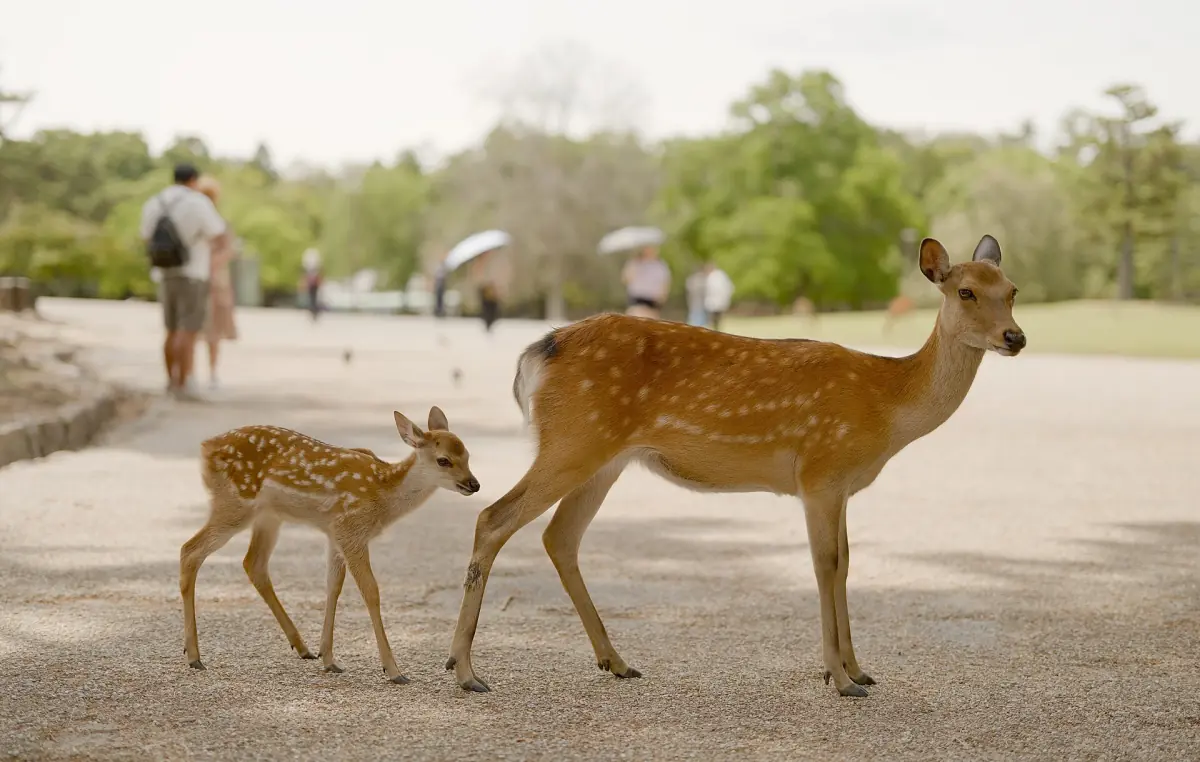
Fawns are normally born from mid-May to July, with a peak around mid-June. A mother can defend her young, so do not approach or touch a fawn. In 2026 the usual presentation of mothers with fawns from June is not held. June and July have the highest rainfall of the year.
Summer: July and August
This is the hottest time, with average highs of 31.7 °C in July and 33.4 °C in August. Start early, carry water and plan indoor stops for the afternoon. Kasuga Taisha opens at 06:30 from March to October. In 2026 the summer lantern festival, the Chugen Mantoro at Kasuga Taisha, took place on 14 and 15 August, and the museum at the shrine stayed open until 20:00 on those days.
Autumn: September to November
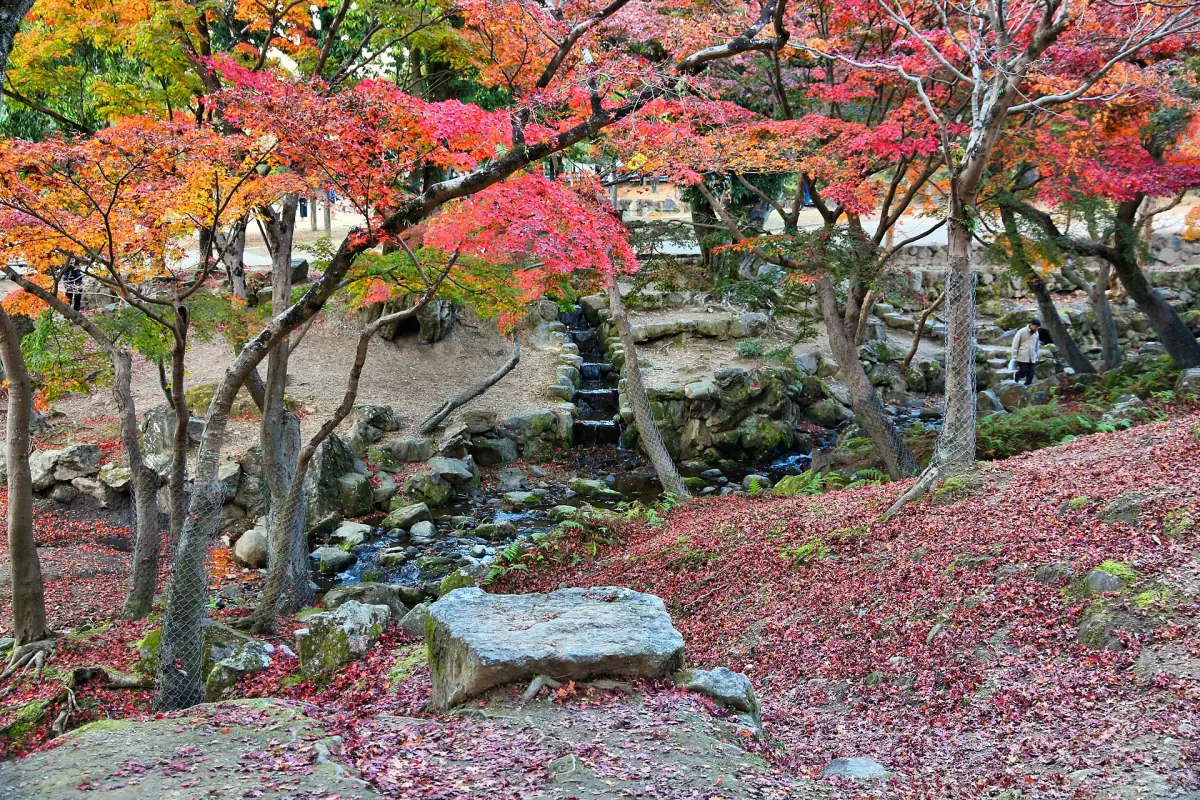
Average highs fall from 28.8 °C in September to 17.1 °C in November. Autumn leaves in the park areas usually come between the end of October and the beginning of December, and at Isuien in mid to late November. Mid-November is a planning window, not a guarantee of peak color across the whole park. Be especially careful with stags in the rut. The National Museum holds its annual Shosoin exhibition in autumn.
Winter: December to February
Days are cool, with average highs of 8.7 to 11.6 °C, and rainfall is at its lowest, between 52.4 and 63.1 mm. The hiking season on Mount Wakakusa ends on the second Sunday in December, and the Yamayaki is announced for 23 January 2027. The Setsubun Mantoro at Kasuga Taisha is usually held on 3 February, so check the date for your year.
Which month for which plan
A short guide, not a ranking.
| You want | Plan for | Watch for |
|---|---|---|
| Cherry blossom | End of March to end of April | Varieties bloom at different times |
| Mild walking weather | April, May, October, November | Rain in all months |
| Autumn leaves | Late October to early December | Isuien in mid to late November |
| Fawns | Mid-May to July | Mothers defend their young |
| Mount Wakakusa hike | Third Saturday in March to second Sunday in December | Hours 09:00 to 17:00 |
| Fire festival | 23 January 2027 | No replacement date if cancelled |
| Cooler weather | November to March | Cold mornings in January and February |
For the temple's own calendar, see the best time for Todai-ji.
Deer and the calendar
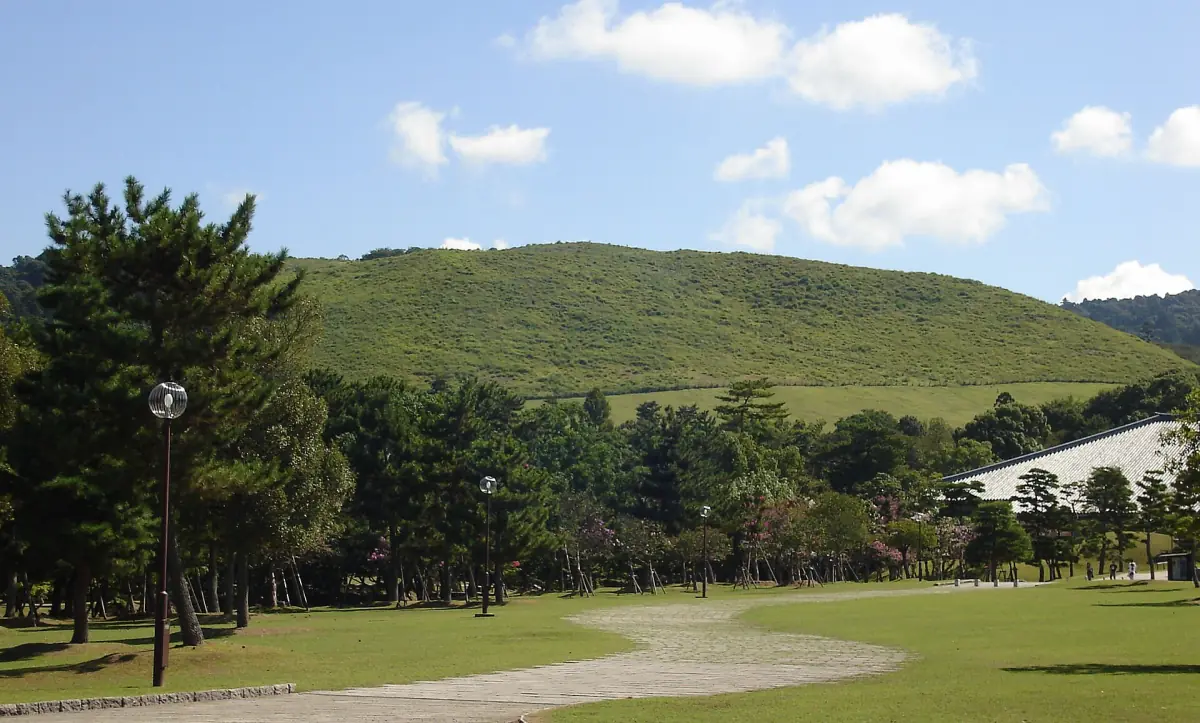
The deer are wild animals in every season. Births in early summer and the rut in autumn are the two periods that call for the most distance. Feeding is not allowed except for the deer crackers sold for the purpose, and the rules are explained on the deer page.
In hot weather, plan your longer walks for the cooler hours of the day.
Best time to visit Nara: frequently asked questions
When is the best time to visit Nara?
Spring and autumn are milder than summer, so they suit long walks. There is no single best week. Pick the season by what you want: cherry blossom, autumn leaves, fawns or a quieter winter day.
When does the cherry blossom start?
Usually at the end of March. Different varieties bloom until the end of April, and the Nara yae sakura can flower into early May.
When are the autumn leaves at their best?
In the park areas between the end of October and the beginning of December, and at Isuien in mid to late November. Treat mid-November as a planning window, not a guarantee.
When are the fawns born?
Normally from mid-May to July, with a peak around mid-June. Do not approach or touch a fawn, because the mother can defend it. In 2026 the usual presentation of mothers with fawns from June is not held.
How hot does it get in summer?
The average high is 31.7 °C in July and 33.4 °C in August, with average lows above 23 °C. Start early and carry water.
Is Nara good in winter?
Yes, if you dress warmly. The average high is 8.7 °C in January and the average low 0.8 °C. The hiking season on Mount Wakakusa ends on the second Sunday in December.